Mr Nobody against Putin
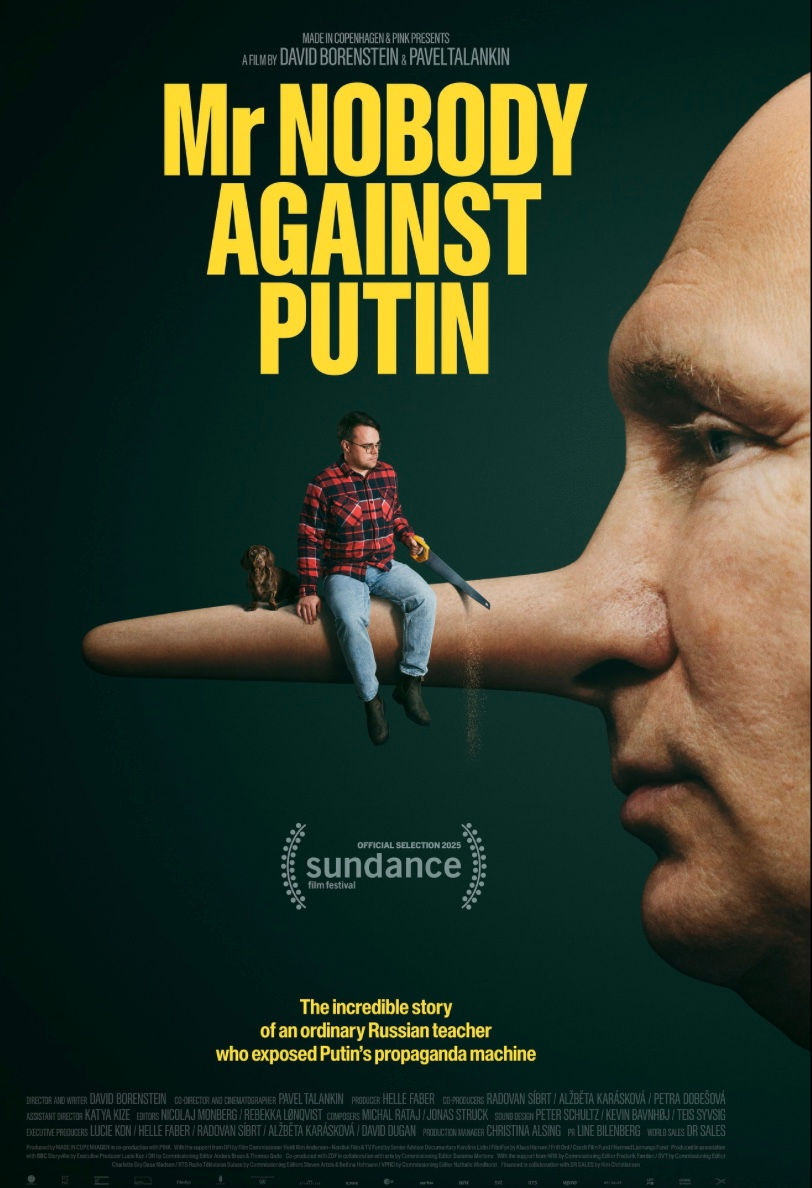
A very interesting and well-filmed documentary that is very unusual, as it was shot in a city in the Urals after the invasion of Ukraine in February 2022 by a teacher. I want to thank Dimitri, my "hockey pal", for sending it to me to share.
I found a very good review by Isabelle Cornaz, a journalist from RTS (Swiss Radio and Television), below, which describes and explains the documentary much better than I could.
You can find the documentary on Youtube, via the link below, on which I have added Eglish subtitles :
"Pro-war propaganda in Russian schools at the heart of a documentary
The Oscar-nominated documentary "Mister Nobody vs. Putin," available on Play RTS, offers a deep dive into the transformation of Russian schools since the invasion of Ukraine. An ordinary teacher became a whistleblower by filming the patriotism and military training courses imposed on school classrooms by the Russian Ministry of Education starting in March 2022.
Pavel Talankin, a teacher in Karabash, a small town in the Ural Mountains, was a videographer at his school. Accustomed to filming school performances and activities, he suddenly found himself required to capture weekly flag-raising ceremonies, grenade-throwing lessons, students writing letters to soldiers at the front, and visits from Wagner Group veterans. Schools were required to send the Ministry of Education proof that they were complying with its directives.
The teacher filmed hours of this propaganda campaign as it was brutally implemented. Reached by phone, he acknowledged that his film was unique because he filmed it all from the inside. "It's impossible to enter a Russian school with a camera, to film easily; no one lets you in," Pavel Talankin explained on the program "Tout un monde" (A Whole World).
His camera also captured more intimate moments : celebrations, his own feelings, and those of his students. He loved his school, his students, and his colleagues. When the world of war burst into the classrooms, he initially filmed it all, stunned. Then he realized he couldn't be complicit, being against the war. He considered resigning but changed his mind. He ultimately continued his work as a videographer, but with the secret intention of publishing his footage.

Glorification of Russia
This militarization of schools had already begun insidiously, starting in 2014, with special cadet classes and the rewriting of certain textbooks. But this was nothing compared to the directives imposed by the Ministry of Education in March 2022 on all schools: texts to read and videos to watch to justify this large-scale war, glorify Russia, and dehumanize the enemy. Weapons training is also part of the curriculum from a young age.

The posts that schools are required to publish on social media are also subject to directives : which photos we should post and which hashtags we should use—everything, absolutely everything, is taken over by this war propaganda,” laments Pavel Talankin.
Between skepticism and overzealousness
Teachers react in different ways. Some seem lost and can’t pronounce the required words, such as “denazification” of Ukraine. Others are overzealous. “During the very first lesson I had to film, I heard the teacher tell her students, ‘Children, we’ve already covered this lesson, but it turns out we have to film it to report to the ministry, so pretend you’re hearing it for the first time.’ Honestly, it devastated me,” recalls Pavel Talankin. “She could have chosen not to.” I wasn't even there with my camera yet. But she had gotten a head start ; she had checked her box.
Pavel Talankin, who co-directed the film with American filmmaker David Borenstein, insisted on keeping a scene in the final cut that shows the distress of some teachers at no longer being able to do their jobs properly. "In it, we see the teachers acknowledging that academic standards are declining, that this isn't just a trend in our school, but across the country." They would like to be able to dedicate their time to educating the children, but they are nonetheless pressured to follow the directives by the principal, who fears being fired if they do otherwise.
Over time, the atmosphere in the schools changes. Pavel Talankin's film depicts the growing mistrust and the risk of denunciation. It portrays a form of freedom that has definitively vanished. In his office, many young people used to come for tea and conversation, but they gradually stopped doing so. Some students lost their fathers or brothers in the war. It became terribly close, even though geographically, the front was 2,000 kilometers away.
The film conveys how this fog of war creates a sense of impasse among the young people. Pavel Talankin is particularly concerned about the impact on the youngest children. "Very young children believe every word their teacher says." He continues : "Sooner or later, we will have to apologize to everyone."
Refuge in Prague
The filmmaker left the country in 2024, fearing a search, his hard drives packed in a suitcase. Now a refugee in Prague, where the house that produced the film is located, he doesn't yet know what the future holds. His film, currently in theaters in France, is in the running for an Oscar.
Overnight, Pavel Talankin lost contact with most of his former colleagues and friends. Alerted to the film's existence, Russian security services reportedly visited schools in his city, urging principals not to speak out, according to the filmmaker.
“They told them: memorize this well, and pass it on to others. This man never existed. This film never existed. You make no comment,” says Pavel Talankin. On birthdays, he sends congratulatory messages to his old friends, trying to keep in touch. “It’s only in this way, little by little, that I can communicate with them, because not responding to birthday wishes in Russia is really considered impolite,” adds Pavel, who maintains a sense of humor despite the difficulties. Ironic and serious, his film is imbued with tenderness and humanity."
Isabelle Cornaz/asch for RTS


Comments